

The Neuroscience of Ritual in Corporate Culture
In every ancient culture, ritual served as the heartbeat of community life — a structured moment where chaos became coherence, individuality merged into belonging, and the ordinary became infused with meaning. From drumming circles to tea ceremonies, from libations poured to prayers spoken, these collective acts weren’t just symbolic — they were neurological technology, designed to regulate the nervous system and synchronize the minds of the group.
Today’s corporate spaces, though sleek and systemized, often suffer from a silent fragmentation. People show up physically but remain disconnected emotionally, cognitively, and spiritually. The result? Burnout, creative stagnation, and a slow erosion of collective purpose. Yet neuroscience now reveals what ancient wisdom has always known: ritual restores the human system to rhythm.
The Neuroscience of Ritual
When humans engage in repeated, intentional acts — especially those shared with others — the brain releases a powerful cocktail of neurochemicals: oxytocin (for trust), dopamine (for motivation), and serotonin (for balance and mood regulation). Synchronizing actions, like walking in step or breathing together, also activates the mirror neuron system, aligning emotional states and enhancing empathy within groups.
These aren’t esoteric effects. They are measurable outcomes that improve performance. Rituals signal the brain that “something meaningful is happening,” shifting attention from scattered multitasking into a coherent, focused state. This neurological coherence is what high-performing teams experience as “flow.”
“When we ritualize the ordinary, we remind the nervous system that life is meaningful. Structure becomes sanctuary — and within that sanctuary, the mind rests, the heart opens, and creativity returns to flow.”
— Tanya Vuyiswa Kayembe | The Black Empress
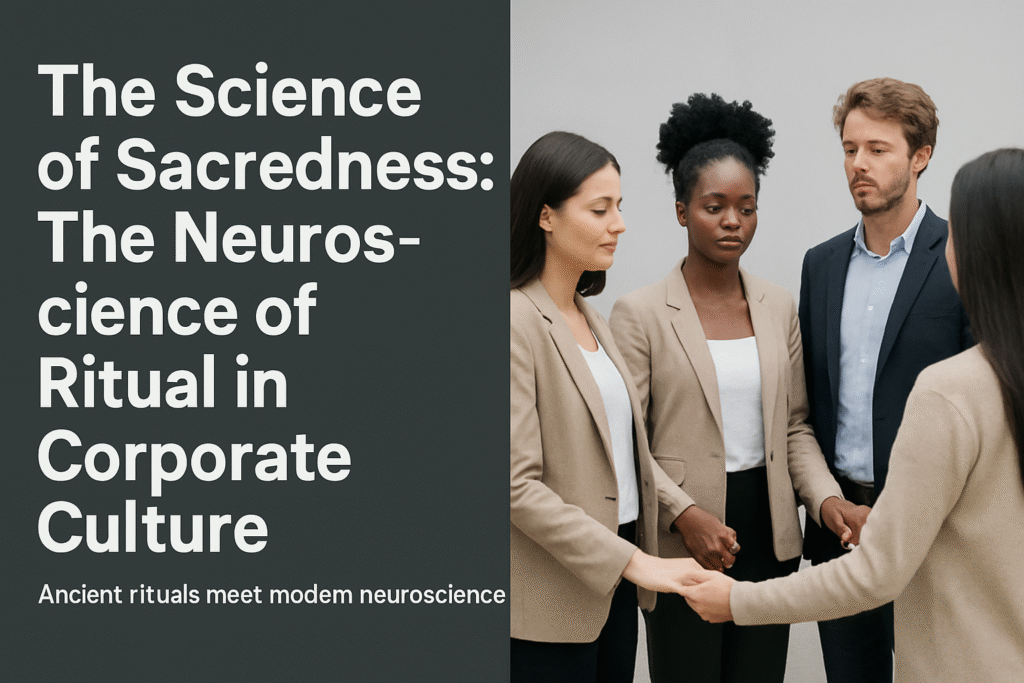
Translating Ancient Rituals into Modern Workplaces
Modern corporate rituals don’t have to involve incense or chanting (though they could). They simply require intention, rhythm, and repetition. For example:
Opening Circles: Begin meetings with a grounding breath or a single reflective question. This lowers collective cortisol levels and enhances psychological safety.
Team Transitions: Mark the end of major projects with a closing ritual — gratitude sharing, collective reflection, or symbolic release. This helps the brain integrate experience before moving forward.
Shared Movement or Sound: Even brief, synchronized actions like stretching together, a short hum, or a three-minute sound meditation can regulate nervous systems across the team.
Rhythmic Check-ins: Weekly rhythms — like “Mindful Mondays” or “Wisdom Wednesdays” — create predictability, which calms the limbic system and boosts trust in leadership.
Ritual transforms routine into meaning. In corporate culture, this is the difference between performing tasks and participating in purpose.
Why Sacredness Matters in Business
Sacredness isn’t about religion — it’s about reverence. Neuroscience shows that when people attribute sacred value to their work, they activate the prefrontal cortex and insula, regions associated with empathy, ethical reasoning, and long-term vision. Teams who work with reverence rather than mere efficiency generate creative innovation and emotional resilience.
Incorporating sacred rhythm into business doesn’t dilute professionalism — it deepens it. It acknowledges that human beings are not just thinkers or doers, but feelers and belongers.
Black Empress Insight
“Ritual is the bridge between the seen and unseen — where the science of the brain meets the language of the soul. When a team moves in rhythm, they don’t just perform — they commune. In that coherence, creativity awakens, and a culture becomes conscious.”
— Tanya Vuyiswa Kayembe | The Black Empress
Integrating Ritual for Corporate Resilience
Organizations seeking sustainability must now evolve from performance-driven models to presence-driven ecosystems. Introducing mindful rituals into leadership development, strategy sessions, and corporate retreats doesn’t just elevate morale — it rewires collective consciousness.
This is how workplaces become sanctuaries of innovation, empathy, and human brilliance.
Call to Action
If you’re ready to bring the power of sacred neuroscience into your organization, explore Awaken Soul Station’s corporate wellness programs and executive retreats. Through a fusion of indigenous intelligence, neuroscience, and embodied leadership practices, we help teams restore rhythm, deepen connection, and cultivate conscious cultures of belonging and brilliance.

About the Author
Tanya Vuyiswa Kayembe, known as The Black Empress, is a psycho-neurological therapist and consciousness coach redefining corporate wellness through the fusion of neuroscience, indigenous intelligence, and sacred leadership. Drawing on her background as a psycho-spiritual guide and organizational healer, Tanya helps executives and teams cultivate coherence, emotional safety, and creative flow through practices rooted in both ritual science and nervous system regulation.
Her work transforms the modern workplace into a living ecosystem — where structure becomes sacred, rhythm restores resilience, and leadership evolves into a shared act of consciousness.
Discover her executive coaching, leadership retreats, and corporate wellness programs at awakensoulstation.africa.